
Guide
Legalizing an unpermitted ADU or garage conversion in San Diego
The short answer
If the unit was built before January 1, 2020, state law bars the City of San Diego, the County and the other cities from refusing a permit just because the unit breaks building standards or ADU rules, though safety problems still have to be fixed. You file plans, prove when it was built and correct anything on the substandard-conditions checklist; in the City, a unit legalized this way pays no water or sewer capacity fees. A garage turned into a bedroom or den, with no kitchen, is not an ADU and follows the regular permit rules.
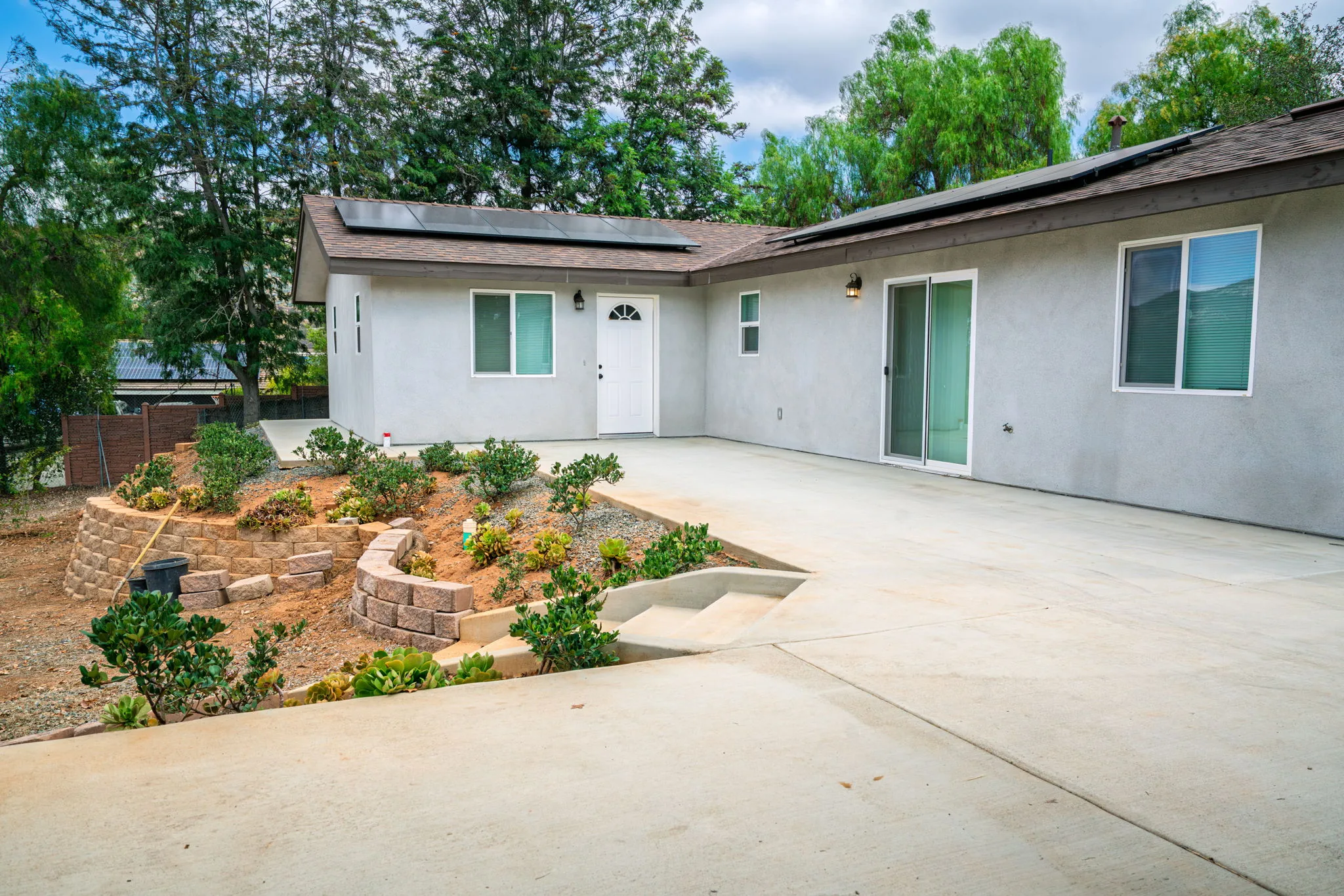
First, is it an ADU?
State law defines an ADU as a complete, independent home on the same lot as a house, with permanent provisions for living, sleeping, eating, cooking and sanitation. A junior ADU is up to 500 square feet of interior livable space inside a single-family house, and it may share a bathroom with the house.
The City's legalization bulletin covers units that meet that definition, whether detached, attached or converted from existing space, and a garage converted into an ADU or junior ADU is one of those conversions.
A garage turned into a bedroom, office or den without a kitchen is a garage conversion, not an ADU. The City's garage conversion bulletin, dated January 2016 and still the one its permit FAQ points to, says a garage that held required parking has to have those spaces replaced, a driveway that no longer leads to legal parking has to be closed, and any part of a garage sitting in a side or rear setback cannot become living space without a variance.
A garage converted into an ADU or a junior ADU is treated differently: in the City, no replacement parking is required, except in the Coastal Overlay Zone within the Beach Impact Area of the Parking Impact Overlay Zone, outside a transit priority area.
What state law says
Assembly Bill 2533 was signed on September 28, 2024. Its rule now sits in Government Code section 66311.7, the number 2025 legislation gave the former section 66332.
- It covers unpermitted ADUs and junior ADUs built before January 1, 2020.
- A city or the County may not deny the permit because the unit violates building standards, or because it does not meet state ADU law or the local ADU ordinance.
- The rule does not cover a building that is substandard under Health and Safety Code section 17920.3, the state's list of conditions that make a home unfit, such as missing sanitation or structural hazards.
- If an inspector finds health and safety problems, the agency may not penalize you for having the unit, and it must approve the permits needed to correct them.
- Before you apply, you may get a confidential code inspection of your own to learn the unit's condition and the work it needs. The statute names a licensed contractor for it; the City's bulletin says a licensed design professional or general contractor.
- Each city and the County has to publish the substandard-conditions checklist and tell homeowners about that inspection.
The only ground left to refuse the permit is a finding that fixing the violation is needed to meet the state's substandard housing standards, such as unsafe wiring, no working sanitation or structural hazards. HCD's handbook still prints the broader wording the law used before 2025, but the statute and the City's bulletin use this one.
Fees
Under the statute, you pay no impact fees and no connection or capacity charges to permit a unit built before 2020, unless new utility infrastructure is needed to fix a substandard condition and the charge is one the state's fee rules allow for that kind of ADU.
In the City of San Diego, a unit permitted under AB 2533 pays no water or sewer capacity fees, the water meter is not resized as part of the review, and no construction and demolition debris deposit is due. The water billing rate may change to count the added unit, and the City's regular permit and inspection fees still apply.
School fees are set by your school district, not the city. A unit under 500 square feet owes none. For a larger unit the law doesn't say whether a district may charge for legalizing space that already exists, so ask the district before you apply. A 450 square foot garage unit from 2015, for example, owes no impact fees and no school fee; a 900 square foot unit from 2018 owes no impact fees, but the district may bill its space at its residential rate.
The City of San Diego's path
The City's Information Bulletin 242 (May 2026) sets out a streamlined building permit for ADUs and junior ADUs in the City that were built without a permit before January 1, 2020.
- Say in the scope of work, on the plans and on the online application, that the project uses AB 2533.
- Prepare plans to the submittal list in the City's addition and remodel bulletin, with the construction date shown on the plans.
- Prove the date with records such as contractor bills or material receipts, utility bills or insurance papers, code enforcement records, a signed and dated lease, loan, appraisal or listing documents, or dated photographs.
- Show on the site plan the property lines, the unit's location, setbacks, easements, utility lines and fire access; on the floor plan, room sizes, the kitchen and bathroom, the water heater and heating, the alarms, the exits and the escape windows.
- Fill in the City's checklist (Attachment A) and correct anything marked non-compliant as part of the permit.
- If you are answering a notice from the City's Building and Land Use Enforcement division, put the case number in the scope of work.
- Apply online as a Building Permit. Inspections follow the permit, and anything installed after January 1, 2020, such as heating, electrical equipment or a water heater, is inspected to current codes.
The usual fixes are life-safety items: smoke and carbon monoxide alarms, an emergency escape opening in each sleeping room, and enough light and ventilation. Fire apparatus access has to reach within 150 feet of the unit, or 200 feet if it has sprinklers, and the voter-approved coastal height limit still applies where it covers your lot.
| Situation | What the bulletin says |
|---|---|
| Built on or after January 1, 2020 | Not covered by the program. |
| Land subject to the Coastal Act | The bulletin cannot be used; the City's Coastal Development Permit rules apply. |
| In a fault zone or a landslide or liquefaction area; dug out under the floor; built with materials the Building Code does not allow; over a public or private easement; or attached to an apartment or commercial building | Not streamlined. The City may ask for more, such as architectural and structural plans, calculations or a soils report. |
| New work on the unit, such as a remodel or an addition | Has to meet the current codes. |
In the unincorporated County
The County's ADU page says AB 2533 streamlining may be open to owners of an unpermitted ADU or junior ADU built before 2020, as long as the unit meets health, safety and building standards. You include plans to bring the unit up to those standards, and you may get a confidential third-party inspection from a licensed contractor first. The County's list of substandard conditions is its form PDS 738.
The County's zoning ordinance says the same thing as state law: it can't turn down a permit for a unit built before 2020 because the unit misses today's building or ADU rules, unless a fix is needed for septic standards or for the substandard conditions on PDS 738. Impact fees and utility capacity charges don't apply unless a utility fix is needed.
The County's 2024 ADU Handbook still says a converted unit has to be designed as if it were new. It was written before this law, and that now holds only for a unit built in 2020 or later. Ask Planning & Development Services at intake what proof of the build date they accept.
If you already have a notice to correct
Until January 1, 2030, a notice to correct a building standard violation on an ADU built before 2020 has to tell the owner of the right to ask for a five-year delay in enforcement. The agency grants the delay when correcting the violation is not needed to protect health and safety, after consulting the agency that enforces the State Fire Marshal's rules.
No new delays are granted from January 1, 2030, though one approved before then runs its full term.
Del Mar's amnesty program
Del Mar adopted an ADU Amnesty Program on December 4, 2023 (Resolution 2023-48), set to run for two years unless the City Council extended it. It offered a confidential consultation and a free first inspection, five years after the building permit to bring the unit up to the Building Code, and fee waivers that grow when the owner agrees to rent the unit to a moderate- or low-income household under a 30-year deed restriction.
Legalizing a unit in Del Mar takes an Administrative Coastal Development Permit, a building permit and a recorded deed restriction keeping it a dwelling unit, and the City checks that the unit existed by April 15, 2021.
The program was set to end on December 4, 2025, and we found no Council extension when we checked on October 19, 2026. The City's Housing Element page still names it in a general list of programs, so ask Del Mar Planning whether any of its incentives still apply.
Either way, the state rule for units built before 2020 applies in Del Mar as it does in every other city and the County.
What changes the answer
These are the cases where the path above moves.
Another city
The state rule applies everywhere, but each of the 17 other cities runs its own permit process for it. Find your authority first, then ask for its checklist.
Built in 2020 or later
A unit finished on or after January 1, 2020 falls outside the state rule and the City's streamlined program.
The Coastal Zone
In the City, the streamlined bulletin cannot be used for unpermitted work on land under the Coastal Act, and the Coastal Development Permit rules apply instead. Del Mar's amnesty process also calls for an Administrative Coastal Development Permit.
Geologic hazards and easements
In a fault zone or a landslide or liquefaction area, or over an easement, the City's streamlined path does not apply, and more engineering may be needed.
A garage that is a room, not a home
Without a kitchen, a converted garage is not an ADU or a junior ADU. The City's garage conversion rules apply, including replacement parking where the garage held required spaces.
Selling the house
Del Mar's ADU page reminds owners that California sellers must disclose unpermitted development before a sale.
Next steps
Find your authority, gather proof of the build date, then tell us about the unit.