
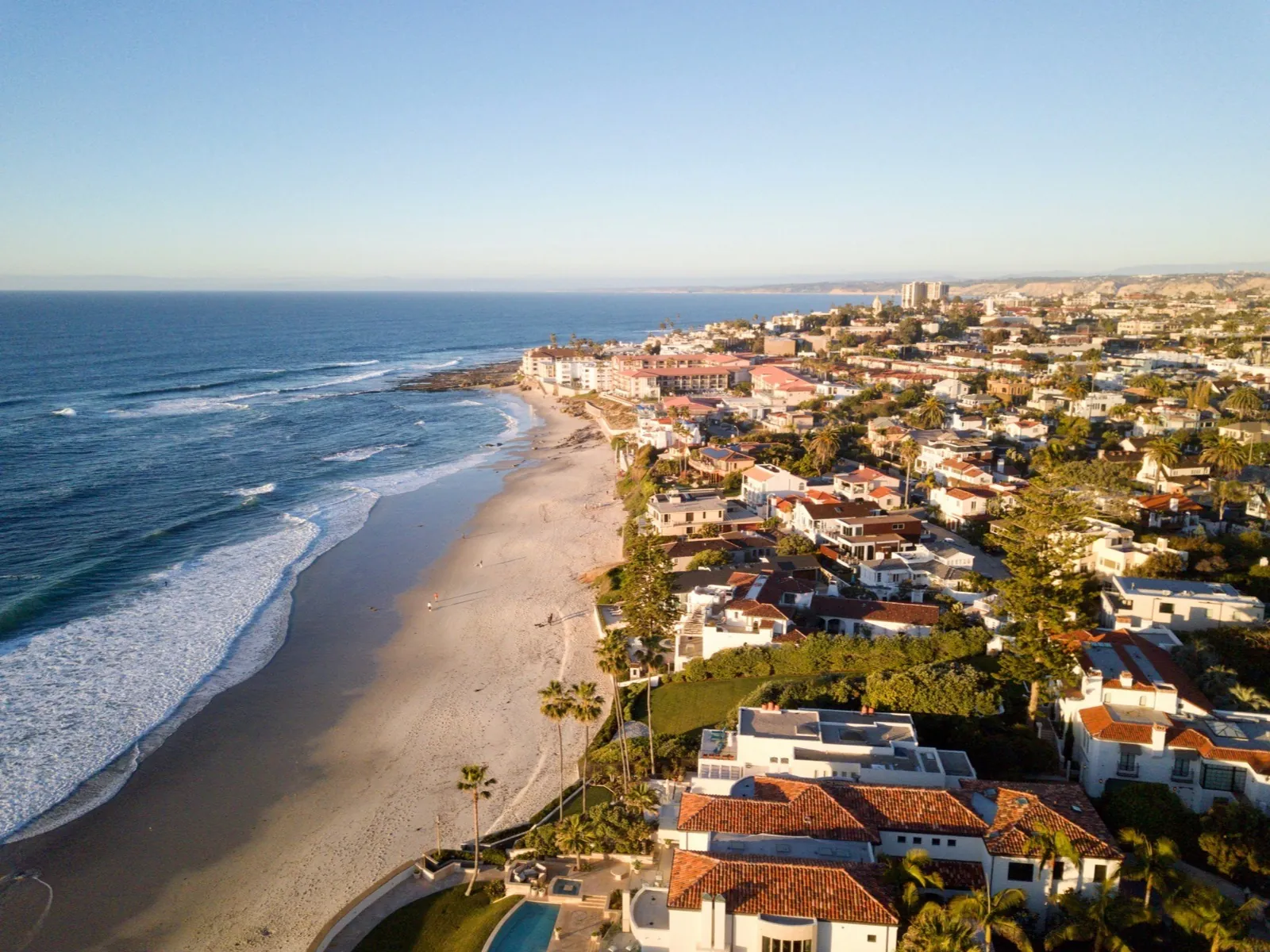
La Jolla is a community of the City of San Diego, so every permit here, for an ADU, a remodel, an addition or a new house, comes from the City's Development Services Department under the City's Municipal Code, and the City's ADU rules are the ones to read first. What is particular to La Jolla is its coast: the whole community sits under the 30-foot Coastal Height Limit and about two thirds of it inside the Coastal Overlay Zone, where the City's 2025 ADU amendments do not yet apply because the Coastal Commission has not certified them, so a coastal La Jolla lot still follows the City's earlier bonus program and fee rules, and a new ADU there that is not wholly inside the house takes a coastal development permit, decided by the City and no longer appealable to the Commission. The community's bluffs, hillsides, public views, beach parking area, fire zone and three historic districts each add a layer.
BHI in La Jolla, from the record
- 1997Licensed in California sinceCheck the license
- 111Permits on the public record, 2000 to 2025See the projects
- 5.0Google rating from 17 reviewsRead the reviews
- A+Better Business Bureau ratingSee the BBB profile
Two of the 111 permits on BHI's public record are in La Jolla, both City of San Diego permits for a pool and spa at a house, one in 2011 and one in 2012, each closed as completed. BHI's ADU permits of 2024 and 2025 are in Escondido and on County land near it. Everything stated here comes from the City's own code, bulletins, maps and pages and from La Jolla's plan, each read for this page on October 27, 2026.
Who issues permits here, and how does plan check run?
Every permit in La Jolla comes from the City of San Diego's Development Services Department, through its online building permit, and the City page on this site sets out its ADU path in full: the bulletin and the code section, the 45-year historic screen, the water meter data card, school fees before issuance and impact fees before final, the state's 15-business-day and 60-day clocks, the City's three accepted pre-approved plan sets with their 30-day review, and the City's own review-time figures. On La Jolla's lots three questions come before any of that: whether the lot is inside the Coastal Overlay Zone and, if so, in its appealable or non-appealable area; whether it holds a coastal bluff, a steep hillside or sensitive habitat; and whether the structure is 45 years old or more.
Inside the Coastal Overlay Zone a new ADU or junior ADU takes a coastal development permit unless it is wholly inside the existing house with no added living area and no converted non-living space. In the non-appealable area, which is most of coastal La Jolla, the City issues that permit as the building permit itself, with no hearing, once it makes four findings: no encroachment on a public accessway, public views kept, the environmentally sensitive lands rules met, and none of the listed exceptions, so a unit within 50 feet of a bluff edge, on a beach or built by taking down half the house's walls cannot use that path. In the appealable area the code sends an ADU's permit to the City's second process, with an appeal to the Planning Commission; since October 2025 the City's decision on an ADU's coastal permit cannot be appealed to the Coastal Commission, as the City's bulletin now says. A junior ADU that meets the exemption needs no coastal permit at all.
Which rules apply on a coastal lot is the second thing to settle. The City's 2025 ADU amendments, in force east of the Coastal Overlay Zone since August 22, 2025, and its 2026 code update do not apply inside it until the Coastal Commission certifies them; the City filed the amendment in July 2025, the Commission gave itself a year in October 2025, and none of its 2026 reports through October names a decision. So a coastal La Jolla lot follows the City's code as certified through Housing Action Package 2.0 in March 2026: the pre-2025 bonus program, no community enhancement fee, and no condominium sale of an ADU until certification. A lot east of the zone, on Mount Soledad near the freeway, follows the 2025 rules.
The community's own bodies review discretionary projects, not a ministerial ADU. The La Jolla Community Planning Association's own page says a permit under the City's first process gets no review by it, while coastal permits under the second to fifth processes go to its development permit committee, or the Shores' permit review committee, and then its trustees; its 2026 minutes show ADUs before it only as parts of larger projects, a new house with a detached unit among them. In La Jolla Shores the planned district's advisory board reports on the applications the City refers to it, and the district's single-family zone allows ADUs and junior ADUs as a limited use under the City's ADU section, inside the district's own height, setback and design rules.
For the projects homeowners bring most often:
- An ADU or junior ADU: the City's online building permit, the 45-year screen, and on a coastal lot the coastal permit, issued with the building permit in the non-appealable area; the pre-2025 bonus program on coastal lots, the 2025 one east of the zone.
- A kitchen or bath remodel: the City's permit, with the historic screen on a house of 45 years or more; inside the Coastal Overlay Zone an interior remodel that adds no floor area needs no coastal permit unless it is within 50 feet of a bluff edge or on a beach.
- An addition or a second story: 30 feet under the Coastal Height Limit, the 45-year screen, and a coastal permit when the addition is between the sea and the first public road or within 300 feet of the beach and adds 10 percent of floor area or height, or takes down half the exterior walls.
- A new house: full plans, a coastal development permit, the bluff and hillside rules with a geotechnical report in the mapped hazard zones, a deed-restricted view corridor on a lot between the shore and the first road, the sea-level-rise rules where mapped, the Shores or village planned district's own standards, and the community planning association's review.
Where do La Jolla's rules differ from the City's and the state's?
They are the City's rules, laid over a coastal community. The La Jolla Community Plan, adopted on November 4, 2003 and certified by the Coastal Commission as the community's coastal land use plan in February 2004, says nothing about ADUs; what it carries for an ADU lot is its bluff policy, its 50 percent rule for a bluff lot measured from the house as it stood on March 17, 1990, its protection of hillsides steeper than 25 percent and its geotechnical report rule in the mapped hazard zones. The two planned district ordinances, the Shores and the village with its outlying centers, apply the City's ADU section where they are silent and prevail where they conflict. No plan or district update is under way.
The City's own map layers, measured against the community's boundary, put the Coastal Overlay Zone over about 67 percent of La Jolla (10 percent in the Commission's appealable area, 53 percent in the two non-appealable areas), the Coastal Height Limit over all of it, the Beach Impact Area over about 21 percent, transit priority areas over 44 percent, the City's very high fire zone layer over 56 percent, and sensitive coastal bluffs over about 3 percent. A lot's own status is read in the City's map apps and confirmed by the City at application; the table says what each layer brings.
| Rule | In La Jolla |
|---|---|
| Which ADU section applies | East of the Coastal Overlay Zone, the City's section as amended in 2025 and 2026. Inside it, the section as certified through March 2026: the earlier bonus program, no community enhancement fee, no condominium sale of an ADU, until the Commission certifies the 2025 amendment it has held since July 2025. |
| The coastal permit | For any ADU or junior ADU not wholly inside the existing house, or adding living area, or converting non-living space. Issued as the building permit on four findings in the non-appealable area; the second process in the appealable area; no hearing in either, no Commission appeal, and a 60-day decision. A junior ADU within the exemption needs none. |
| Height | 30 feet at most anywhere in La Jolla under the Coastal Height Limit Overlay Zone, which covers the whole community, beside the City's ADU heights; the Shores and village districts' own limits where they are lower. |
| Coastal bluffs | On a mapped sensitive coastal bluff no building on the bluff face and every building, accessory structure and addition set back 40 feet from the bluff edge, reduced to no less than 25 feet only on a geology report that weighs bluff retreat, sea level rise and storm effects, with a recorded waiver of any future seawall; at-grade features no closer than 5 feet; drainage away from the bluff; a recorded hold-harmless agreement before any permit. The City's ADU section applies the bluff rules to every coastal ADU and to any existing structure converted into one. |
| Steep hillsides and habitat | Where a lot holds a slope of 25 percent or more, sensitive biological resources or a flood hazard area, the City's environmentally sensitive lands rules apply to the whole lot: development stays off the slopes, encroaching only to reach a 25 percent development area, and in the Coastal Overlay Zone coastal development on steep hillsides is minimized to the maximum extent possible; a Site Development Permit where the unit encroaches. Mount Soledad's slopes are the plan's named hillsides. |
| Views and sea level rise | On a lot between the shoreline and the first public road where the plan protects a view, a deed-restricted visual corridor at least the side setbacks wide and no more than 10 feet. In an area of future sea level rise within 75 years, the City's flood hazard rules, no hard shoreline armoring, and a recorded acknowledgment and waiver; the ADU section applies both to every coastal ADU. |
| Parking | None in the Coastal Overlay Zone, except in the Beach Impact Area of the Parking Impact Overlay Zone outside a transit priority area: there a new ADU over 500 square feet needs one space, and a garage converted or taken down is replaced, unless the unit is attached, in a historic district, in a permit parking district or within a block of a car share. The Beach Impact Area covers about a fifth of La Jolla along the shore; the City's two transit layers differ, so the counter's reading of your lot is the one that counts. |
| Fire | On a lot in the very high fire hazard severity zone, the City's 2025 map adopted July 29, 2025: the 4-foot side and rear setback at any height, the brush management setbacks and the fire official's further ones, the state's wildfire construction standards, two evacuation routes for a bonus ADU, and Zone 0 on a new structure applying from February 28, 2026 and an existing one from February 28, 2027. The City's zone layer reaches over half of La Jolla, on Mount Soledad and the canyons. |
| Historic | Every La Jolla structure 45 years old or more goes through the City's historic screen before an ADU or garage conversion permit, since the City's exemption areas do not reach La Jolla; a designated resource, a property in one of the three designated districts or one that qualifies for the state or national registers takes the fuller review before any alteration, permit or not, and the Secretary of the Interior's Standards apply. The Mills Act needs local designation. |
| Unpermitted units | The City's path for a unit built before 2020 does not reach the Coastal Overlay Zone; an unpermitted ADU on a coastal La Jolla lot is legalized through the coastal permit chapter instead. |
| Rentals | 31 consecutive days or more for an ADU. No ADU may be a short-term residential occupancy, whose Tier Three licenses for whole homes, La Jolla's tier, are capped citywide; only a companion unit permitted before October 15, 2017 may. |
| Selling a unit on its own | The City's condominium path and the nonprofit route sit in the 2025 amendment, so neither is available on a coastal La Jolla lot until certification; east of the zone the City's conditions apply. |
Where the City's documents still read differently, and what governs:
- The appealable area's process. The code sends a stand-alone ADU's coastal permit there to the City's second process with a Planning Commission appeal, while the statute makes an ADU ministerial and the bulletin says the decision cannot go to the Coastal Commission; which path the Department applies to such a unit today is a question for intake.
- The junior ADU's rental term. The code's printing says a junior ADU has no term limit; the bulletin and the statute say longer than 30 days, and they govern.
- The bonus program's sale line. The City's page says a bonus ADU can never be sold separately; the code bars only an assisted or rent-restricted one. The code governs, east of the zone only.
- The fire layer. The City's map service carries no edition date, so the share of La Jolla it covers is a measurement of that layer; the 2025 map viewer decides a lot.
Can you build from a pre-approved ADU plan here?
Yes, the City's: the three plan sets the City has accepted under the state's program, reviewed in 30 days, as its ADU page describes and the City page on this site explains. On a La Jolla lot the set still meets the Coastal Height Limit, the bluff and hillside setbacks and, in the Shores, the planned district's design rules, and it still takes the coastal permit where one applies, so a pre-approved plan shortens the plan check and not the coastal work.
The coast, the hillsides, the historic districts and the planned districts
The Coastal Overlay Zone in La Jolla has three parts: the Commission's appealable area, the strip between the sea and the first public road and the land within 300 feet of a beach, a bluff's face or a wetland, about a tenth of the community; the two non-appealable areas inland of it, more than half; and small deferred patches. The City's community planning association puts it plainly on its own page: except for parts of Mount Soledad near the freeway, projects in La Jolla are generally subject to the Coastal Act. The illustrative map the City publishes shows the outline; the City's map app and the City Manager's confirmation at application settle a lot.
Three historic districts are designated in La Jolla: El Pueblo Ribera and the Bishop's School on the City's register, and the La Jolla Park Coastal Historic District along Coast Boulevard from Coast Walk to Whale View Point, listed on the National Register on May 9, 2024 and on the state's, with 35 contributing resources, shoreline parkland rather than house lots. The City's register layer holds 231 designated resources inside the community, of 3,530 citywide, so the 45-year screen is the ordinary first step on an older La Jolla house.
La Jolla Shores is its own planned district, with a seven-member advisory board that meets monthly and reports within 30 days on the applications the City refers to it; its single-family zone allows ADUs as a limited use under the City's section, inside the district's own rules, and where the two conflict the district's apply. The village and its outlying centers, and the multifamily and cultural areas west and north of the core, are the La Jolla Planned District, whose divisions carry no ADU rule of their own and apply the City's section where they are silent. Neither district has an update in progress; the planning association's own page for one is an empty draft.
Which fees apply, and where are the schedules?
The City's fees are the City page's: plan check and inspection from the City's fee bulletin, with the smaller base for an attached ADU or junior ADU up to 1,100 square feet or a detached ADU up to 500 square feet and the larger base above that, the general plan maintenance fee on every unit, the historical resource review by the hour where the screen calls for it, and the City's water and sewer capacity charges by equivalent dwelling unit, with the County Water Authority's capacity charges when a new meter goes in, stepped on January 1, 2027. The fee bulletin's edition is August 2026 though the fees page still labels it September 2025.
- Impact fees. The City waives its development impact fees on the first two ADUs on a lot at any size, and on any ADU under 750 square feet, a junior ADU or a movable tiny house; a coastal lot's bonus units stay under the earlier rules, and the community enhancement fee on bonus ADUs, charged on projects from May 20, 2026, does not reach a coastal lot until certification.
- School fees. San Diego Unified's residential rate per square foot, set May 10, 2026, paid through the district with its certificate of compliance sent to the City; none on construction adding 500 square feet or less, or on one new detached ADU or junior ADU under 500 square feet.
- Water and sewer. Capacity charges by equivalent dwelling unit, the water fee deferrable, collected for the Public Utilities Department at the permit; the schedule the bulletin links overlays several years' figures, so the counter's current figure is the one to take. Whether the unit needs its own meter is decided on the water meter data card in plan check; a unit inside existing space is not a new residential use under state law.
- Everything else. The coastal permit's own fee and notice, the hold-harmless agreement on a bluff lot, the geotechnical report in a hazard zone, and in the Shores the advisory board's referral.
How many ADUs La Jolla permits
The City reports its ADU permits to the state as one figure, in the thousands a year; its own permit layer shows La Jolla's share: 9 ADU permits issued in 2018, 42 at the peak in 2023, 21 in 2025 to late July.
- 92018
- 62019
- 62020
- 122021
- 202022
- 422023
- 222024
- 212025
The City of San Diego's ADU permit layer, records created through July 21, 2025 at the time of the query: ADU and junior ADU building permits with La Jolla as their community plan area, counted by the year issued, so 2025 is a partial year; 225 records since 2007, 144 issued, 155 flagged in the Coastal Overlay Zone. These are the City's permit records for the community, not the state's count: the City reports its whole territory to HCD in one figure, which the City page charts, and its 2024 report names Clairemont Mesa, North Park and Southeastern San Diego as the leading communities, not La Jolla.
Recent changes in La Jolla
Rule changes in La Jolla since 2024 and one coming in 2027, newest first.
AB 956's second new detached ADU reaches La Jolla too, but on the roughly two thirds of the community inside the Coastal Overlay Zone each one still takes the City's coastal development permit, now beyond appeal to the Commission. The rest of the 2027 law is set out here.
The Coastal Commission's reports through October 2026 name no action on the City's 2025 ADU amendment, so a coastal La Jolla lot still follows the earlier bonus program and fee rules; the City's code update page still reads that approval is anticipated in 2026.
The City's 2026 code update took effect east of the Coastal Overlay Zone, amending the Shores advisory board's section among others; inside the zone it waits with the 2025 amendment.
The community enhancement fee on bonus ADUs began on projects with fee dates from this day, east of the zone only.
San Diego Unified's school fee rate per square foot took effect.
Housing Action Package 2.0 took effect in the Coastal Overlay Zone on the Commission's certification, the latest certified text on a coastal La Jolla lot.
Zone 0 began for a new structure applying for a permit in a very high fire zone; existing structures follow from February 28, 2027.
The state's housing department found the City's 2025 ADU ordinance short on four points, with a reply due November 5, 2025; the Commission granted a one-year extension on the coastal amendment the same month. The statute that ended Commission appeals of an ADU's coastal permit took effect on October 10, 2025, and the City's ADU bulletin of January 2026 now says so.
The City's 2025 fire hazard severity zone map took effect, adopted July 29, 2025.
The City's 2025 ADU amendments took effect east of the Coastal Overlay Zone.
The La Jolla Park Coastal Historic District was listed on the National Register of Historic Places, the first national district in La Jolla.
What BHI has seen here
Beyond the code: what BHI's own permit record shows in La Jolla.
BHI's public permit record holds two La Jolla permits, both City of San Diego permits for a pool and spa at a single-family house, one issued in October 2011 and one in July 2012, each closed as completed, so the record shows the City's permit and inspection process run through to a final in La Jolla twice. BHI's measured ADU times are the County's, on its Escondido-area units, where plan review ran between five weeks and about seven and a half months by the type of unit; the City's own review figures for its ADUs are on the City page. On a La Jolla lot BHI's first check is the City's coastal overlay map, because the zone decides both the permit and which version of the rules the unit meets.
What an ADU might rent for in La Jolla
ADUs carry no published rent of their own, so the figure is HUD's FY2027 Small Area Fair Market Rent for La Jolla's ZIP code, the one the ROI calculator uses, by size: the rent that four in ten recent movers pay less than, utilities included.
| ZIP | Studio | 1 bed | 2 bed | 3 bed |
|---|---|---|---|---|
| 92037 | $2,620 | $2,800 | $3,380 | $4,480 |
HUD's FY2027 figures for ZIP 92037 by bedroom count, as the ROI calculator holds them; the data file lists the ZIP under the City of San Diego. The ROI calculator runs them out over 30 years for your lot.
Questions homeowners in La Jolla ask
The eight questions people put to search and answer engines about building in La Jolla, answered from the City's code, bulletins and the community plan: five on ADUs, two on remodels and additions, one on a custom home.
What pushes up the price of an ADU on a coastal La Jolla lot?
The coast moves the number most here. Most new ADUs in the Coastal Overlay Zone need a Coastal Development Permit on top of the building permit. If your lot has steep hillsides or a coastal bluff, a discretionary permit can be added as well. One thing works in your favor. The City waives its development impact fees on the first two ADUs on a lot, at any size.
With the Coastal Commission still reviewing San Diego's 2025 ADU changes, how many units can go on my La Jolla lot?
Usually you can build. On a single-family lot the City of San Diego allows the house plus one attached or detached ADU, one ADU made from the house or an existing accessory structure, and one junior ADU. Bonus ADUs are possible if some stay affordable. On a coastal lot, though, that bonus program still runs on its pre-2025 rules, since the 2025 amendments are waiting on Coastal Commission approval.
Will the 30-foot coastal height limit stop a two-story ADU in La Jolla?
Not on its own, but it sets the ceiling. West of Interstate 5, the voter-approved 30-foot Coastal Height Limit caps any two-story ADU. A new attached or detached unit can have up to 1,200 square feet of gross floor area. Keep it at 16 feet or under and, outside a fire hazard zone, you need no side or rear setback. Go taller and it must sit 4 feet from the neighbor's line.
La Jolla isn't its own city, so whose desk does my ADU application land on?
The City of San Diego's Development Services Department. La Jolla is a community inside the city, so there is no separate La Jolla permit office. If your ADU needs a coastal permit and nothing else, that permit has its own 60-day deadline and no public hearing. Pick one of the outside plan sets the City accepts and you get a 30-day review.
Which of San Diego's newer ADU rules haven't reached the coastal part of La Jolla yet?
The big one is Ordinance O-21989, the City's 2025 ADU amendments. It is not in effect in the Coastal Zone yet, so its cap of four to six units by lot size does not apply there. Housing Action Package 2.0 is different: it has covered coastal lots since March 11, 2026. Check parking too. In the Beach Impact Area a new ADU generally needs one off-street space unless an exception applies.
Can I redo a La Jolla Shores kitchen without drawn plans or a historic review?
Often, yes. You still need a permit, but the City of San Diego's No-Plan Building Permit works when you keep the walls and framing where they are and add no new plumbing fixtures. Inside the La Jolla Shores Planned District, interior remodeling needs no separate planned district permit. Interior work is also exempt from the City's 45-year historic screening.
How high can a second story go in La Jolla, and when does an addition set off a coastal permit?
Between the ocean and Interstate 5 you cannot go above 30 feet. Proposition D set that limit, and only a public vote can change it. In the Coastal Overlay Zone, watch the walls you take down. Remove half or more of the exterior walls, counted floor by floor in linear feet, and the project loses its exemption from a Coastal Development Permit. In La Jolla Shores, an addition also needs a planned district permit, which the Advisory Board reviews unless the City treats it as minor.
Buying a La Jolla teardown to build new: what could hold the house up?
First find out if the lot is in the La Jolla Shores Planned District. There a new house needs a planned district permit, and a Hearing Officer usually decides it after the Advisory Board weighs in. Then look at the 30-foot Coastal Height Limit and the Coastal Development Permit. Steep hillsides or a coastal bluff bring a Neighborhood or Site Development Permit. If the house you'd tear down is 45 years or older, historic screening comes first.
Next steps
Start with the City's rules and La Jolla's coastal map for your lot, then the price, then the reading that fits your project.