
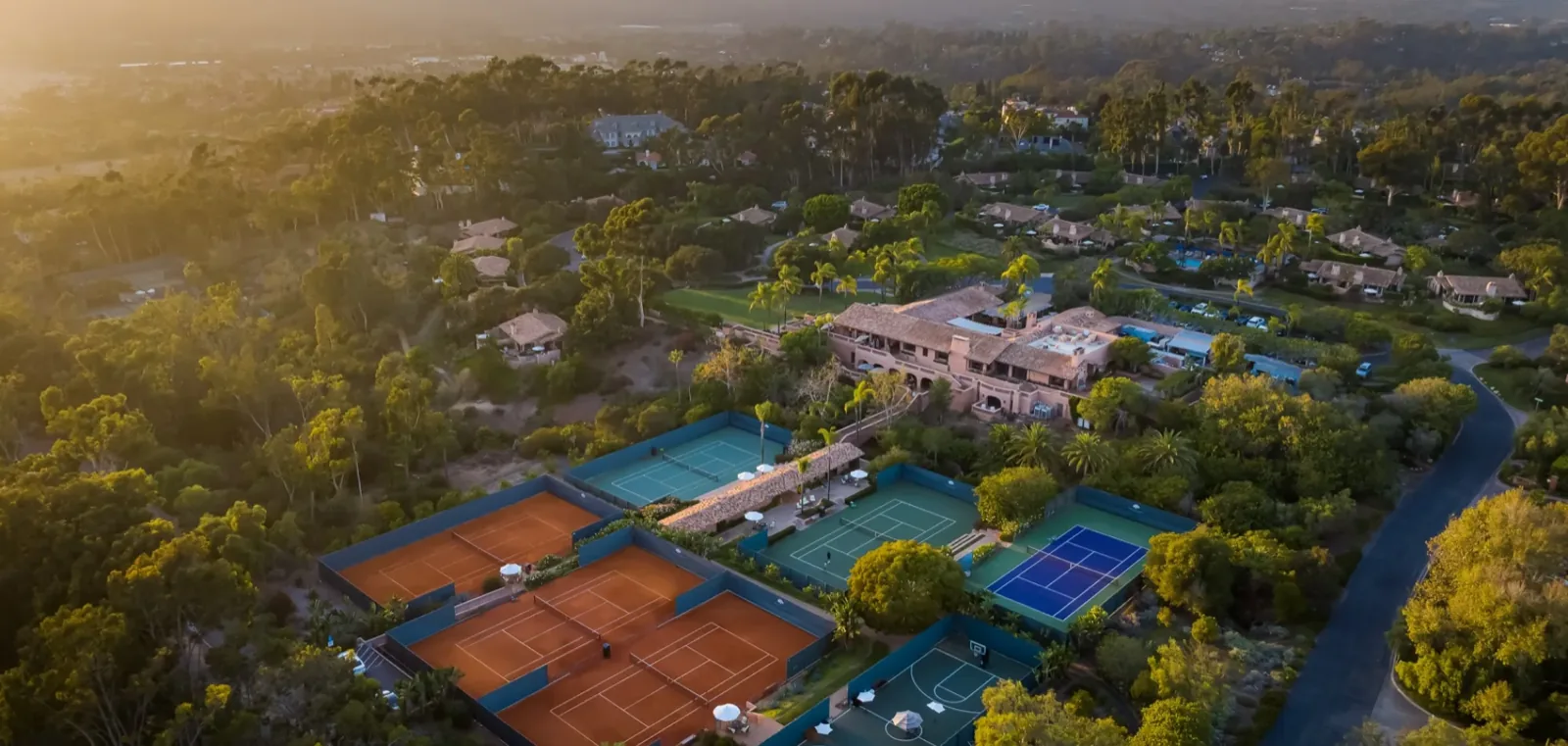
Rancho Santa Fe is not a city. It is unincorporated land in the County's San Dieguito planning area, so the County of San Diego's Planning & Development Services issues the building permit for an ADU, a remodel, an addition or a new house, under the County's zoning ordinance and state law. Two more rulebooks apply here and nowhere else in the county together: the Rancho Santa Fe Fire Protection District's 2025 fire and wildland codes, in force since January 1, 2026, which put a sprinkler system in every new building and ignition-resistant construction on every new or remodeled one, and inside the 6,720-acre Covenant the 1928 Protective Covenant, whose Art Jury approves the plans before the Association issues its own construction permit. State law voids any covenant line that prohibits or unreasonably restricts an ADU, and the Association's own fine schedule now exempts permitted ADUs.
BHI in the San Dieguito area, from the record
- 1997Licensed in California sinceCheck the license
- 111Permits on the public record, 2000 to 2025See the projects
- 5.0Google rating from 17 reviewsRead the reviews
- A+Better Business Bureau ratingSee the BBB profile
Sixteen of the 111 permits on BHI's public record were issued by the County in the San Dieguito planning area, the County area that holds Rancho Santa Fe, between 2000 and 2011: pools and spas, outdoor kitchens and fireplaces, a retaining wall and a 416 square foot addition, most of them completed. BHI's ADU permits of 2024 and 2025 are on County land near Escondido.
Who issues permits here, and how does plan check run?
The County's Planning & Development Services issues every building permit in Rancho Santa Fe, from its permit center in Kearny Mesa and its online portal, with the Building Division running plan check and the County's own ADU forms, standard plans, fee schedule and timelines, all of which the County page on this site sets out. For an ADU the County's zoning ordinance and state law supply the rules, the state's clocks run (a completeness notice within 15 business days, a decision within 60 days of a complete application), and the County's permit fee for an ADU has its own line, with a cheaper over-the-counter line for a set that needs no full review.
What makes a Rancho Santa Fe permit different is the three desks beside the County's. The fire district reads the building plans, the sprinkler plans through a consultant it accepts, and a landscape and fuel modification plan, each in about 30 business days from payment, through its own online portal, and stamps the County-approved sets before final. The water district signs the water supply letter the sprinkler design needs and sets the meter. And inside the Covenant the Association's Art Jury reviews the design at a conceptual, a plan and a final stage on a schedule of thirteen meetings a year, with deadlines about three weeks before each; the Association then issues its own construction permit, inspects the grading, foundation and framing separately from the County, and issues a certificate of completion before the unit is used.
The Association's set goes in through its own portal: a professional plan set showing both the County's and the Covenant's setbacks, a grading plan with every slope of 25 percent or more marked where there is grading, and story poles for any new building. Its standard conditions bind every project: underground utility connections, flat tinted skylights, screened equipment, shielded lights with no uplighting, and since 2016 a fiber conduit from the street to the building. The order of the two approvals is not fixed in writing; the Association's guidelines put the Art Jury's approval of the working drawings before approval to build, and its staff check the County's plan sets against them.
On a septic lot the County's Department of Environmental Health and Quality comes first, with an approved system layout before the building permit; the County's own answer is that an ADU almost always exceeds the existing tank and disposal field. Where the Community Services District's sewer lines reach, a sewer permit replaces that step. A lot's zone, and with it the County's accessory building rules, is read from the County's property summary report.
For the projects homeowners bring most often:
- An ADU or junior ADU: the County's permit under state law and the County's ordinance, the fire district's three reviews and its sprinkler system, the water district's letter and meter, septic or sewer, and inside the Covenant the Art Jury and the Association's permit.
- A kitchen or bath remodel: the County's building permit, the district's ignition-resistant rules on a remodeled structure, and the Association's approval for any change to the roof or the outside.
- An addition or a second story: the Covenant's two stories and 35 feet, its 20 percent lot coverage and its court and yard table, story poles for a second story or an addition over 35 percent of the house, the district's sprinklers throughout when an addition passes half the house, and school fees above 500 square feet.
- A new house: a 2.86 or 2 acre lot in the Covenant's residence areas, the Art Jury's three stages with story poles, the district's 30-foot fire setback, 100 feet of fuel modification and a 16-foot paved driveway, the County's grading permit above 200 cubic yards and the Association's above 100.
Where do Rancho Santa Fe's rules differ from state law?
The County's ADU section (6156.x of the zoning ordinance, amended on March 4 and September 18, 2026) is the only ADU law here, and the County page states it and the five points on which the state's housing department found it short on July 7, 2026, each of which state law settles. The San Dieguito Community Plan, adopted with the County's general plan on August 3, 2011 and amended in 2013 and 2014, has no ADU policy of its own; what it does is keep the Covenant's lots at 2.86 and 2 acres and the rest of the area at two acres or more, and the zoning ordinance adds that a lot with an ADU may not also have the County's guest living quarters.
The two other rulebooks are what the table is for. The Rancho Santa Fe Fire Protection District's ordinances are law in its 50 square miles, and the County's ADU section makes the district's concurrence part of the permit. The Protective Covenant of 1928 is a private restriction the Association and its Art Jury enforce on their members; it never uses the words accessory dwelling unit, and the Civil Code voids any of its lines that prohibit or unreasonably restrict a unit built to state law, leaving only reasonable restrictions that do not drive up the cost or rule the unit out.
| Rule | In Rancho Santa Fe |
|---|---|
| How many units | The state's and the County's counts: a converted unit, a detached unit of 800 square feet or less and a junior ADU on a single-family lot, plus the ordinary attached or detached unit. The Covenant's paragraph 97 allows one detached single-family dwelling on a building site and paragraph 88 lets quarters for servants or guests be built only with the Association's written approval and never rented outside the family; both are the lines the Civil Code limits, and the Association's fine schedule of August 2025 already exempts legally permitted ADUs from its rental fines. |
| Where on the lot | The County's 4-foot side and rear setbacks. The Covenant adds its own: an accessory building sits on the half of an interior lot away from the street, never within ten feet of a side or rear line that fronts a neighbour's front half unless 75 feet from the street or attached to the house, and the garage door does not face the street. Where the two sets differ the Covenant's is the private one, enforceable only as a reasonable restriction. |
| Size, stories and coverage | The County's 1,200 square feet detached and half the house attached. The Covenant's paragraph 88 keeps sleeping rooms in an accessory building to the ground floor on a lot under 20,000 square feet, and its residence districts hold a building to two stories and 35 feet and a lot to 20 percent coverage; state law guarantees an 800 square foot unit regardless of coverage. |
| Sprinklers | The district's 2025 Fire Code puts an approved sprinkler system in every new building, an ADU included, with buildings under 10 feet apart counted as one; the only exemptions are a Group U building of 1,200 square feet or less set 20 feet from other buildings and 30 feet from the lines, and a fabric greenhouse. State ADU law bars a local ADU ordinance from requiring sprinklers the house does not need; the district's rule is a fire code of general application that the County's permit incorporates, so plan on sprinklers and confirm with the district at intake. The sprinkler design needs a permanent meter of at least 1 inch and the water district's supply letter dated within a year. |
| Fire construction and setbacks | Every parcel in the district is in a moderate, high or very high zone, on the State Fire Marshal's map of March 24, 2025 adopted unchanged on June 18, 2025. The 2025 Wildland-Urban Interface Code applies to every new building and its accessory buildings: 100 feet of fuel modification around a habitable building, a 30-foot fire setback from the property lines measured from a road's centerline, 100 feet from a forest, park or preserve, and 15 or 30 feet from the top of a slope by the building's height. Ignition-resistant construction applies to every new or remodeled structure under the district's 2025 modifications, kept in force under the state's 2025 freeze. |
| Access | A driveway serving one or two parcels is paved 16 feet wide, with turnouts past 150 feet, a 28-foot inside turning radius and a grade of 15 percent, or 20 with the fire official's leave and a broom-finished concrete surface; hydrants within 400 feet of every wall, or 600 for a sprinklered house; a 4-foot hose path around every structure. |
| Design review | Inside the Covenant every structure, roof change, accessory building and any grading is major construction that needs the Association's approval in advance, under the Art Jury's judgment that a design must be reasonably good. Approval of a style check lapses in six months and of a final submittal in a year; building before the Association's permit draws a special assessment, a suspension and a recorded notice; assessments must be current before the Art Jury hears a case. |
| Grading and slopes | Inside the Covenant no grading at all without the Association's grading permit, Art Jury approval above 100 cubic yards in two years and the County's grading permit above 200; retaining walls over 32 inches are reviewed, and the district's slope setbacks apply. The County's resource protection rules on steep slopes, wetlands and floodplains, along the San Dieguito River and Escondido Creek, attach to discretionary applications rather than a single lot's ministerial permit. |
| Parking | The County's one space, with the state's exemptions. The Association's code asks one screened off-street space for a guest house and keeps a two-car enclosed garage plus one space when a garage is converted; the Civil Code's reasonableness test applies to both as they touch an ADU. |
| Rentals | The County's 31-day floor. The Association fines the rental of an accessory building to anyone outside the family, legally permitted ADUs excepted, allows part of an owner-occupied house to be rented for more than 30 days, and bars event-venue rentals. The County itself sets no zoning rule on short-term rentals, only its 8 percent occupancy tax on stays of 30 days or less. |
| Selling a unit on its own | The County's condominium program since April 4, 2026, with the conditions it added on September 18, 2026; whether an ADU condominium map inside the Covenant needs the Association's approval under its common interest development chapter is not answered in any document read. |
| Lighting and utilities | Shielded lights with diffused lenses and no uplighting under the Association's lighting regulation and standard conditions, in a planning area whose plan names dark skies as a value; utilities underground and a fiber conduit to the building on every new project. |
| Horses and trails | Two acres to keep horses under the Association's code; a riding and hiking trail easement is exacted on a subdivision or a boundary adjustment, not on a building permit, and contractors keep off the trails. |
Where the documents read differently, and what governs:
- One dwelling per building site and no rental of guests' quarters, in the Covenant, against state ADU law and the Civil Code: state law governs, the Covenant survives only as a reasonable restriction, and the Association's own fine schedule reads it that way.
- Sprinklers in every new building, in the district's fire code, against the statute's bar on an ADU ordinance requiring them: the district's code is not an ADU ordinance and the County's ADU section requires the district's concurrence, so the district's rule is what the counter applies; confirm it there.
- The five points of the County's ordinance the state found short in July 2026, among them the junior ADU's owner-occupancy rule and the unit combinations: state law governs each, as the County's own determination says.
- The district's 2024 plan check form still cites the 2023 codes; its 2025 ordinances, in force since January 1, 2026, govern. The State's register dates the Covenant landmark to February 17, 1989; the community plan's 1982 reads against it.
- No written Association policy on ADUs exists: how the Art Jury sites a detached unit, whether it asks story poles for one, and whether its approval comes before or after the County's are questions for the Association's building and planning department before you draw.
Can you build from a pre-approved ADU plan here?
The County's standard ADU plans are the ones on offer: a set the County page describes, each about 85 percent complete and finished for your lot by a designer, with the County's reduced plan check. On a Rancho Santa Fe lot the set still goes to the fire district for its sprinkler and wildland review and, inside the Covenant, to the Art Jury, whose guidelines ask a design to be reasonably good and in keeping with its neighbours, so a standard plan is a starting point here rather than a shortcut.
Fire, water, septic, the landmark and the Covenant's lots
The Rancho Santa Fe Fire Protection District, formed in 1946, covers about 50 square miles from six stations: Rancho Santa Fe, 4S Ranch, Fairbanks Ranch, Cielo, The Crosby, Elfin Forest and Harmony Grove. It adopted the State Fire Marshal's 2025 map as its own on June 18, 2025, adding nothing to it, and its 2025 Fire Code and Wildland-Urban Interface Code took effect on January 1, 2026 as one of the twelve districts under the County's consolidated wildland code. A sale in a high or very high zone brings the district's defensible space inspection. Its plan check runs about 30 business days a submittal, with the fees due when the plans are dropped off.
Water comes from the Santa Fe Irrigation District for most of the Covenant and Fairbanks Ranch and from the Olivenhain Municipal Water District for parts of Rancho Santa Fe, Rancho Cielo, 4S Ranch and Fairbanks Ranch, with small peripheral areas on two other districts; which one serves a lot is read from the lot. Sewer is the Rancho Santa Fe Community Services District, formed in 1982 with about 3,000 customers, roughly the Covenant plus the Bridges, Hacienda Santa Fe, Rancho Del Rio and Santa Fe Valley, with two reclamation plants of its own and the south west on the San Elijo plant. Everywhere else is septic under the County's health department, and Del Dios, about 160 houses above Lake Hodges, has sat under a building and septic moratorium since 1954.
The Covenant covers about 6,720 acres and 1,900 building sites, nearly all improved, in residence areas of 2.86 and 2 net acres that the County's plan keeps in zoning and in every discretionary action; around it about 1,800 acres of later subdivisions, nearly all with their own covenants and review committees, and Fairbanks Ranch and its neighbours on two-acre lots or clustered at one unit per two acres. The whole planned community is California Historical Landmark 982, registered on February 17, 1989, with a cultural landscape amendment in 2004, and Lilian Rice's buildings of 1923 to 1938 are listed together on the National Register. No County historic review attaches to a ministerial ADU permit; a property carrying the County's historic designator needs an approved site plan first, and the Art Jury's review is the Covenant's own.
Which fees apply, and where are the schedules?
Four schedules meet on a Rancho Santa Fe ADU. The County's, with its own ADU plan review and permit lines, effective July 10, 2026, and the park fee the County collects at issuance, which has a 2026 ADU rate for the San Dieguito area about half the single-family rate. The fire district's, effective October 5, 2024: one line for a building of 1,200 square feet or less, ADUs named, covering two plan reviews and an inspection, another for the ADU's sprinkler review, a landscape review, a resubmittal fee, and the County's fire mitigation fee per square foot of residential floor area at the district's rate for the fiscal year from July 2026. The water district's and the Association's, below.
- Impact fees. An ADU of 750 square feet of interior living space or less owes none, the park fee and the fire mitigation fee included, and a proportionate share above that, under state law; neither the park schedule nor the mitigation chart prints the exemption.
- School fees. San Dieguito Union High School District sets a rate per square foot of living space, exempts 500 square feet or less, and collects for the Rancho Santa Fe, Solana Beach and Del Mar elementary districts, whose shares it quotes on request; the Solana Beach district's share is in its 2024-25 fee report, and the Rancho Santa Fe School District publishes no rate.
- Water. The Santa Fe Irrigation District's capacity charge by meter size rose 47 percent on January 15, 2026 after its 2025 study, with the County Water Authority's charge on top, the meter at time and materials and an engineering fee; Olivenhain charges by zone from January 1, 2026. Neither publishes an ADU rule: state law bars a connection fee or capacity charge on a converted unit and caps a new unit's at its share, and the district's sprinkler policy makes a 1-inch meter the usual minimum.
- Sewer and septic. The Community Services District charges a connection fee per equivalent dwelling unit when it issues a sewer permit, made up of a service charge, a treatment capacity fee and line reimbursements, with no amount or ADU rule on its page; on septic the County's health department charges for the percolation review and the layout report, each on its fee page with the new rates set for the fiscal year from July 2026.
- The Association. A residential construction permit application fee in two tiers at 1,500 square feet, covering plan checking, noticing, the story pole review, the Art Jury's site visit and the inspections, a construction permit fee per square foot and a refundable deposit at twice that rate, from which special inspections and non-conformance charges are drawn; an as-built application pays double. No ADU line; a unit falls under the residential or accessory building lines.
How many ADUs Rancho Santa Fe permits
The County reports its ADU permits to the state as one figure; its own permit data, sorted by mailing address, shows Rancho Santa Fe's share: 6 ADU permits issued in 2018, 23 at the peak in 2022, 16 in 2025.
- 62018
- 82019
- 52020
- 102021
- 232022
- 142023
- 192024
- 162025
The County's open permit data, records updated through October 26, 2026: building permits of the ADU and junior ADU types with a Rancho Santa Fe mailing city or ZIP code, counted by the year they were issued, 161 opened since 2018 and 11 issued so far in 2026. These are permit records by mailing address, not the state's count: the County reports its whole unincorporated area to HCD in one figure, which the County page charts, and no agency publishes a Rancho Santa Fe figure of its own.
Recent changes in Rancho Santa Fe
What has changed in the rules here since 2024, newest first.
The 1928 Covenant's paragraph 97 allows one dwelling per building site, yet from 2027 the County must approve two new detached ADUs built to state rules, and Civil Code 4751, which holds the Covenant to reasonable restrictions, reaches any lot zoned to allow a house. Read how both work.
The County's conditions on the separate sale of an ADU as a condominium took effect, added to the program adopted on March 4, 2026.
The deadline for the County's answer to the state housing department's five findings of July 7, 2026 on its ADU ordinance; nothing published since shows an amendment.
The County's building fee schedule took effect with its ADU plan review and permit lines; the park fee's 2026 ADU rate and the fire mitigation chart for the new fiscal year followed on July 1.
The County's consolidated 2026 Wildland-Urban Interface Code took effect across the twelve fire districts, the Rancho Santa Fe district among them.
The Santa Fe Irrigation District's new capacity charges took effect, up 47 percent on its 2025 study; Olivenhain's zone charges were updated on January 1.
The fire district's 2025 Fire Code and Wildland-Urban Interface Code took effect: sprinklers in every new building, fuel modification, the fire and slope setbacks and the access standards.
The district's ordinance keeping its residential modifications, ignition-resistant construction on every new or remodeled structure among them, took effect under the state's freeze on local building standards, adopted October 15, 2025.
The Association amended its Regulatory Code; its fine schedule exempts legally permitted ADUs from the Covenant's accessory-building rental fines.
The fire district adopted the State Fire Marshal's 2025 fire hazard severity zone map as its own, 5 to 0, introduced May 21.
The fire district's fee schedule took effect, with its lines for a building of 1,200 square feet or less, ADUs included, and the ADU sprinkler review.
What BHI has seen here
Past the three rulebooks: what BHI's own permit record shows in the San Dieguito area.
BHI's public permit record holds 16 County permits in the San Dieguito planning area, the County area that holds Rancho Santa Fe, issued between 2000 and 2011 with San Diego mailing addresses: pools and spas, outdoor kitchens and fireplaces, a retaining wall, a 416 square foot addition in 2011, most of them closed as completed and a few expired. Each went through the County's permit and inspection process, the same path an ADU in the community takes. BHI's measured ADU plan-review times are the County's, on its Escondido-area units, where a garage conversion cleared in five weeks and a two-story detached unit took about seven and a half months; on a Covenant lot the fire district's 30 business days a submittal and the Art Jury's meeting calendar are added to that.
What an ADU might rent for in Rancho Santa Fe
ADUs have no published rent of their own, so the table is HUD's FY2027 Small Area Fair Market Rents for Rancho Santa Fe's two ZIP codes, the figures the ROI calculator starts from, each the rent that four in ten recent movers pay less than for a home of that size, utilities in.
| ZIP | Studio | 1 bed | 2 bed | 3 bed |
|---|---|---|---|---|
| 92067 | $2,810 | $3,000 | $3,630 | $4,810 |
| 92091 | $2,680 | $2,860 | $3,510 | $4,690 |
HUD's FY2027 figures for ZIP 92067 and ZIP 92091 by bedroom count, as the ROI calculator holds them; the data file lists both under the unincorporated County. The ROI calculator runs them out over 30 years for your lot.
Questions homeowners in Rancho Santa Fe ask
The eight questions people put to search and answer engines about building in Rancho Santa Fe, answered from the County's ordinance, the district's code and the Covenant: five on ADUs, two on remodels and additions, one on a custom home.
What adds cost to an ADU in Rancho Santa Fe once the Association and a septic system are involved?
The County's plan check and permit fees apply here, since its trial ADU fee waiver ended in January 2024. If you're on septic, plan for the system. The County's environmental health staff says an ADU almost always outgrows the existing tank and field. Inside the Covenant, the Association charges its own fees and deposits for Art Jury review and for its building permit.
Can the Rancho Santa Fe Covenant stop me from adding an ADU?
Not outright. State law voids any covenant term that effectively prohibits or unreasonably restricts an ADU. The Association and its Art Jury still have to approve a detached unit on Covenant land. Under County zoning you can add an ADU to any residentially zoned lot with a house, and pair a converted ADU and a junior ADU with a new detached one as large as 800 square feet. The Association's fine for renting guest quarters doesn't apply to a legally permitted ADU.
How large can a guest house ADU be in Rancho Santa Fe, and how far back from a slope?
A detached ADU can reach 1,200 square feet no matter how big your house is, and 25 feet tall. An attached ADU is held to half the house's floor area, up to 1,200, but you're always allowed 850 square feet, or 1,000 with two or more bedrooms. The County asks for 4-foot side and rear setbacks. The local fire district's code is stricter near slopes: 15 feet back from the top, or 30 feet for two stories.
Rancho Santa Fe has the County, a fire district and the Association: who approves my ADU, and in what order?
The County's Planning & Development Services issues the building permit, since Rancho Santa Fe is unincorporated. The Rancho Santa Fe Fire Protection District reviews the plans on its own track, typically in about 30 business days. On Covenant lots the Association comes last. It issues its own permit only after the Art Jury approves and you send in the County-stamped plans.
How often does the Rancho Santa Fe Art Jury meet, and how long does its approval last?
If your lot is under the Protective Covenant, the Art Jury has to approve the ADU. Plans go through the Association's Building Department first. In 2026 the Jury meets about once a month, and applications are due roughly two weeks before each meeting. A preliminary approval lasts six months and a final one a year. The Association's building permit then runs a year. Grading of more than 100 cubic yards in two years needs its own Art Jury approval.
Will the Art Jury or the fire district get involved in my Rancho Santa Fe kitchen remodel?
They can. The County permit comes first. Its exempt list covers painting and finish work, and an owner or licensed plumber can swap a toilet, faucet or showerhead without opening a wall, floor or ceiling. Moving plumbing, wiring or walls needs a County permit. In the Covenant area, a changed window or door opening or new exterior colors needs Art Jury approval. If the remodel significantly changes the interior or roof, the fire district may require sprinklers throughout.
Does a Rancho Santa Fe room addition count as Major Construction, and will it mean sprinklers?
Yes, any addition to a roofed area counts as Major Construction. That means Art Jury approval and an Association permit on top of the County's building permit. The Covenant allows two stories and 35 feet. The fire district wants sprinklers throughout the house once an addition is more than half the size of the existing building. One break: the County's wildfire building code exempts additions to homes first built before July 1, 2008.
What does the land itself allow before I design a custom home in Rancho Santa Fe?
Start with slope and grading. The Association bars grading or building on slopes steeper than 25 percent, with narrow exceptions, and limits cut or fill to 8 feet at any point. Move more than 200 cubic yards and you also need a County grading permit. On septic, the County's environmental health staff approves the system first. The fire district reviews landscaping and fuel modification plans and asks you to keep 100 feet of defensible space around buildings.
Next steps
Check your lot against the County's rules, the fire district's and the Covenant's, price the ADU, then read what fits your project.