
Guide
Do I need a permit to remodel my kitchen or bathroom in San Diego?
The short answer
In the City of San Diego, usually yes, but often without drawing plans. A kitchen or bath remodel that leaves the structure, the wall framing and the exterior walls alone, and adds no plumbing fixtures, can go on a No-Plan Building Permit that also covers the electrical, plumbing and mechanical work. Painting, new flooring and cabinet work need no permit at all, while moving walls means plans and a plan review, and adding a fixture or a gas appliance takes the job outside the No-Plan permit.
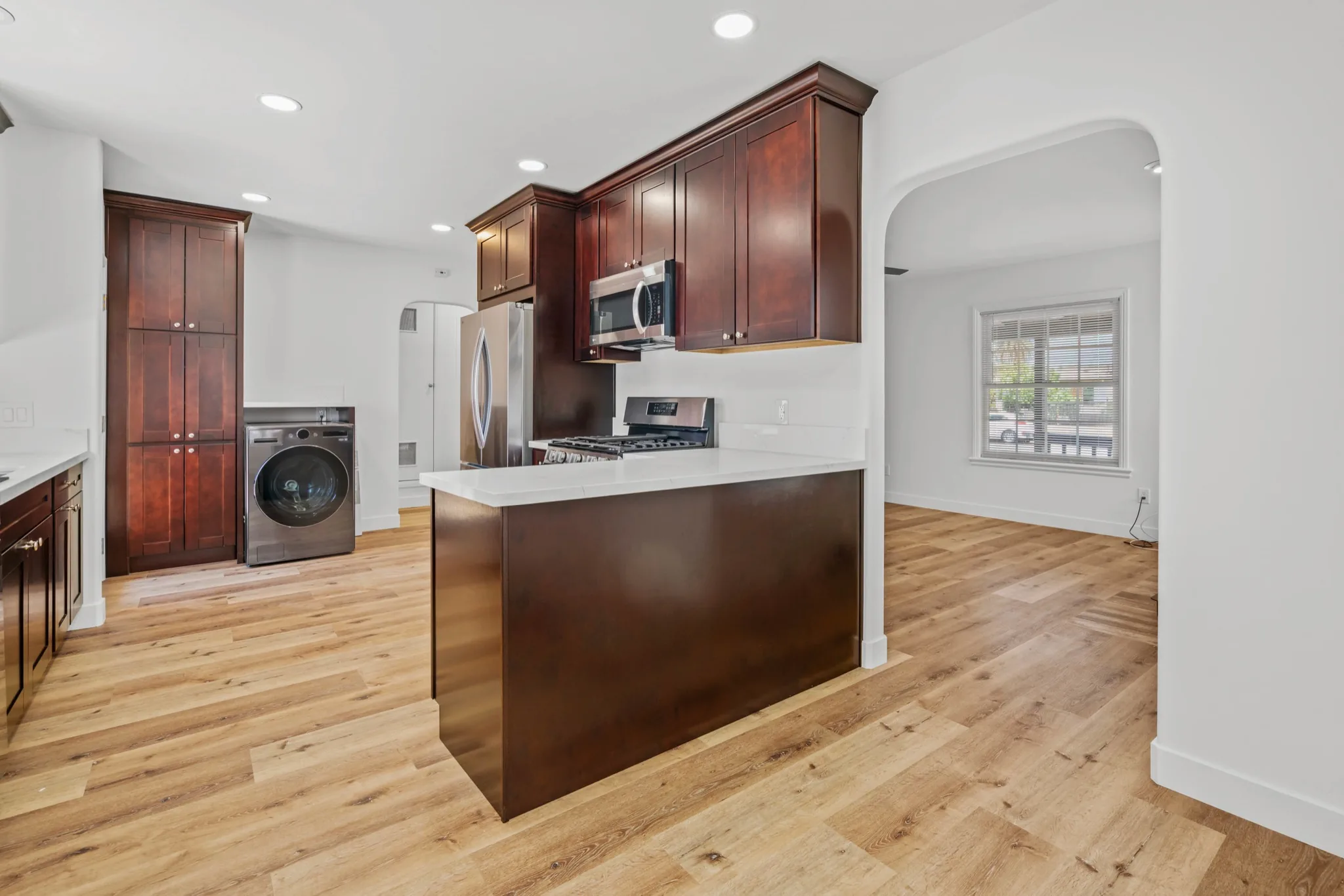
First, check who issues your permit
This guide follows the City of San Diego's rules. Each of the 17 other cities issues its own permits, and in an unincorporated community the County issues yours, from its own list of what needs one.
In the City, the starting point is simple: building, altering, repairing or converting a structure needs a building permit. Everything that follows is an exception to that rule.
Work that needs no permit in the City
The Municipal Code lists the work that needs no building permit, and the City's No-Plan bulletin lists the common ones. For a kitchen or bath, these are the ones that matter. Exempt work still has to meet the codes.
- Painting, wallpaper and similar finish work, new floor covering and cabinet work.
- Moving cabinets and countertops within the kitchen of a house, duplex or townhouse.
- Swapping a tub for a tub or a shower for a shower, when the size and the location stay the same.
- Replacing up to 100 square feet of drywall in total to repair electrical, plumbing or mechanical work.
- Replacing a door or window in its existing opening in a house, duplex or townhouse, when the flashing and the rough opening stay as they are and the unit does not have to be fire rated or meet the Very High Fire Hazard Severity Zone rules.
- Maintenance repairs with similar materials that stay under a small valuation cap set in the code and leave the electrical and mechanical installations alone. The City's bulletin adds plumbing to that list.
Two things apply to every item. None of these exemptions covers a designated historical resource or a home in a historic district, a lot with environmentally sensitive lands that needs a development permit, or a building with unreinforced masonry bearing walls or parapets. And skipping the building permit does not skip an electrical, plumbing or mechanical permit, so moving a sink or an outlet along with the cabinets can still need one.
Some small electrical jobs need no permit either: replacing a switch, a receptacle or a light fixture with one of the same size and general type, and repairing or replacing a hardwired dishwasher, disposal or cooking appliance when the work adds no load to the circuit.
You don't need a plumbing permit to swap a toilet, sink or tub for a new one of the same kind, as long as the drain, vent and water supply pipes stay as they are. Moving a fixture, adding one or changing those pipes takes a permit, and so does replacing a water heater: a tank heater can go on the City's No-Plan permit, while a tankless one needs a plan permit. The City's one-page permit sheet lists in-kind fixture swaps on both sides; the Municipal Code is the rule.
The No-Plan Building Permit
Most kitchen and bath remodels in the City land here. The City issues a building permit without reviewing plans for a remodel of an existing kitchen or bathroom in a residential building (occupancy groups R-2 and R-3) that changes no structural elements, no wall framing and no exterior walls, and adds no plumbing fixtures.
The City's fee schedule treats it as one combination permit per dwelling unit, covering the plumbing, mechanical and electrical work, and it also leaves out remodels that add a gas appliance. If the scope includes any framing, plans are required.
- The building must have been legally permitted, built and given its final inspection. A kitchen or bath inside an unpermitted addition or unit cannot use this permit.
- If the inspector decides the work is too extensive, or cannot confirm the existing construction qualifies, plans are required and a new permit is issued.
- You apply online as a Building Construction application, with the No-Plan supplemental form (DS-6005) and the project contacts form (DS-345). An owner doing the work as an owner-builder signs the owner-builder form (DS-3042); a tenant cannot sign it.
- A licensed contractor receives the permit once the application is in and the invoice is paid. An owner-builder generally receives it within two business days of filing the owner-builder form.
- When a permit is required for repairs or replacements in an existing home, smoke alarms and carbon monoxide alarms have to be installed to current code.
- Work that blocks or affects fire sprinklers or fire alarms needs its own permit.
- Fees are set in the City's fee schedules, Information Bulletins 501 and 103.
| The work | What the City requires |
|---|---|
| Paint, wallpaper, new flooring, cabinet work | No permit |
| Moving kitchen cabinets and countertops; a same-size tub or shower in the same place | No building permit (moving plumbing or wiring can still need its own permit) |
| A remodel with no change to the structure, the wall framing or the exterior walls, and no added plumbing fixture or gas appliance | A No-Plan Building Permit, one combination permit for the plumbing, mechanical and electrical work |
| Any framing: moving or removing a wall, a new or wider window or door opening | A building permit with plans |
| Adding a sink, a shower, a toilet or a gas appliance | Outside the No-Plan permit |
| On its own: new circuits, moved outlets, a new exhaust fan or air conditioner, a replacement furnace, a water heater that is not tankless | A Simple MEP permit, self-issued with no plans, but not on a designated historic property or in a historic district |
| Any change to a designated historical resource or a home in a historic district | Historical review before the work, even for work that would not otherwise need a permit |
When historic review joins in
If any building on your lot is 45 years old or older, a construction permit, No-Plan permits included, normally goes through the City's historical screening first. Interior work, and work that needs only an electrical, plumbing or mechanical permit, is exempt as long as nothing changes on the outside of the building.
So a kitchen or bath remodel that stays inside the walls is generally outside the screening, while a new or bigger window or a moved exterior door generally brings it in. When the screening applies to a No-Plan permit, the City says it typically takes ten business days.
A designated historical resource, or a home inside an adopted historic district, is a different case. The City reviews every alteration against the federal preservation standards before it happens, including work that would not otherwise need a permit.
What changes the answer
Everything above follows the City of San Diego. Here is what can change it for your home.
Another city
Each of the 17 other cities issues its own permits and keeps its own list of exempt work. Find your authority first, then read its list.
The unincorporated County
The County's list differs from the City's. It needs no plumbing permit when the owner or a licensed plumber replaces a toilet, faucet, showerhead or bidet without opening a wall, floor or ceiling, or when a licensed plumbing contractor installs a replacement water heater of the same type. In the City, replacing a water heater other than a tankless one takes a Simple MEP permit.
A house 45 years old or older
Interior-only work is exempt from the City's historical screening, and so are a few kinds of exterior work, such as an in-kind roof replacement. Most other changes to the outside of an older building go through it, and a designated home or one in a historic district is reviewed for every change.
Earlier work done without a permit
The No-Plan permit is only for buildings that were legally permitted and passed their final inspection. A kitchen or bath inside unpermitted space cannot use it, and an unpermitted ADU has its own path to a permit.
Fire hazard zones
The no-permit window and door swap does not apply when the existing unit has to be fire-resistive or meet the Very High Fire Hazard Severity Zone requirements.
The Coastal Overlay Zone
Near the coast, a project that grows to remove half or more of a building's exterior walls, counted floor by floor, needs a Coastal Development Permit, and the City notes that other coastal rules can require one too.
Next steps
Find your authority, check the age of the house, then tell us about the room.